Stuck in a price war on container-home exports? Passive House-level wall U values could be your way out.
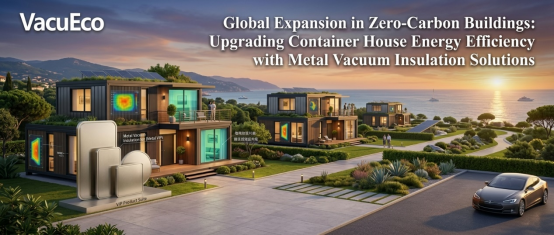
Building energy rules are getting tighter worldwide. For Chinese modular buildings and prefabs heading into premium markets in Europe, the US and the Middle East, building fast is only part of the pitch. Buyers want energy use under control too.
Want a selling point that stands out without piling on expensive certification costs? Think Passive House-level energy performance, with external-wall U ≤ 0.15~0.20 W/(m²·K). That gets buyers’ attention.
But for container-home and prefab design teams, getting that number on a report is only part of the job. The walls still have to work, and people still need room inside.
The Maths Behind the Thick-Wall Trap
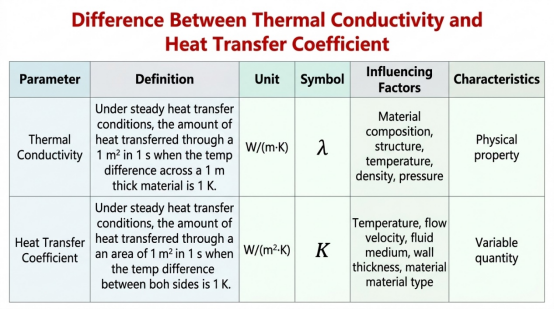
Difference Between Thermal Conductivity and Heat Transfer Coefficient
| Parameter | Definition | Unit | Symbol | Influencing Factors | Characteristics |
|---|---|---|---|---|---|
| Thermal Conductivity | Under steady heat transfer conditions, the amount of heat transferred through a 1 m² in 1 s when the temp difference across a 1 m thick material is 1 K. | W/(m·K) | λ | Material composition, structure, temperature, density, pressure | Physical property |
| Heat Transfer Coefficient | Under steady heat transfer conditions, the amount of heat transferred through an area of 1 m² in 1 s when the temp difference between both sides is 1 K. | W/(m²·K) | K | Temperature, flow velocity, fluid medium, wall thickness, material type | Variable quantity |
Here’s the basic maths: insulation thermal resistance R = d / λ, where d is material thickness and λ is thermal conductivity. The overall heat-transfer coefficient is K = 1 / ΣR, usually called the U value.
To show buyers Passive House-level insulation at U ≈ 0.15 W/(m²·K), the insulation needs to provide an overall thermal resistance R above 6.0 (m²·K)/W:
| Material Layer | Thickness d (m) | Thermal Conductivity λ [W/(m·K)] | Thermal Resistance R (m²·K/W) | Water Vapor Permeability μ [g/(m·h·Pa)] | Water Vapor Permeance Resistance H [m²·h·Pa/g] |
|---|---|---|---|---|---|
| Extruded Polystyrene (XPS) Board | 0.06 | 0.003 | 1.818 | 0.000 06 | 333.33 |
| Mixed Mortar | 0.02 | 0.87 | 0.022 9 | 0.000 097 5 | 205.13 |
| Brick Wall | 0.24 | 0.81 | 0.296 | 0.000 075 | 3 200 |
| Cement Mortar | 0.02 | 0.93 | 0.021 5 | 0.000 12 | 166.67 |
With conventional rock wool at λ ≈ 0.040 W/(m·K), you need d = Rλ = 6.00.040 = 0.24m. Yep, that’s 240mm of rock wool.
Aerogel blankets at λ ≈ 0.020 W/(m·K) halve that thickness, but you’re still looking at around 120mm. Plus a hefty purchase price and a risk of structural collapse under high temperatures or hot, humid conditions.
A 240mm insulation layer can swallow nearly 10m² of usable space in a 100m² modular container-home assembly. That’s a 10% drop in usable floor area, just from wall thickness.
And if the bulky module exceeds ISO Container dimensions, shipping costs can jump several times over. Ouch.
Big Energy Bills (OPEX), Damp Insulation
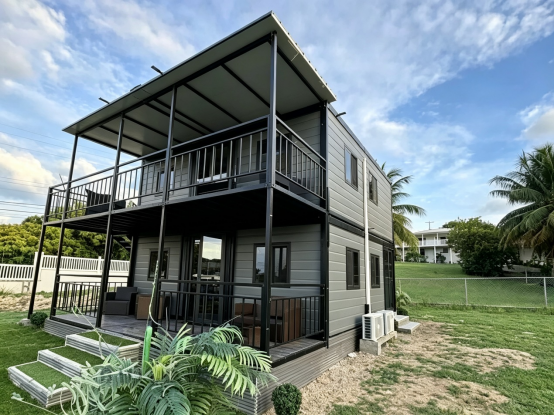
Electricity is expensive, especially Europe, the Middle East and island nations. Buyers are looking beyond the purchase price to the energy bills they’ll keep paying.
From Nordic cold at -30°C to Middle Eastern desert heat at 50°C+, big indoor-outdoor temperature gaps can easily cause condensation inside conventional porous fibrous insulation.
At 20°C, water’s thermal conductivity is about 0.6 W/(m·K), 25 times that of air. Once insulation gets wet, its actual thermal conductivity can rise exponentially. There goes the energy-saving pitch. Hidden corrosion under insulation (CUI) can hit the light-gauge steel framing too.
Poorly detailed panel joints and connections to the steel frame can also create serious thermal bridges in assembled container homes, causing local condensation.
Thin Metal Vacuum Insulation Panels (VAP): Changing the Equation
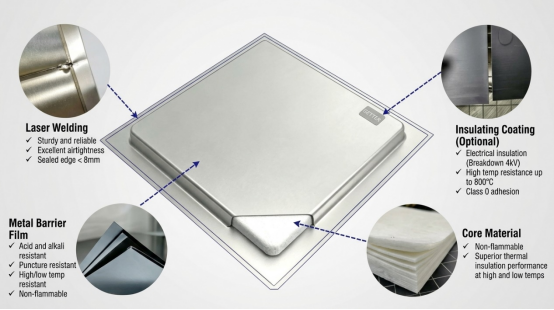
Laser Welding
-
Sturdy and reliable
-
Excellent airtightness
-
Sealed edge < 8mm
Metal Barrier Film
-
Acid and alkali resistant
-
Puncture resistant
-
High/low temp resistant
-
Non-flammable
Insulating Coating (Optional)
-
Electrical insulation (Breakdown 4kV)
-
High temp resistance up to 800°C
-
Class 0 adhesion
Core Material
-
Non-flammable
-
Superior thermal insulation performance at high and low temps
Want Passive House-level insulation without stuffing 20cm of insulation into the walls? You need a much lower thermal conductivity λ.
That’s where vacuum physics comes in. Put the core under a high vacuum and gas conduction and convection are eliminated.
Take Super Tech Advanced Material’s VAP high-temperature metal vacuum insulation panels, a metal-shell solution for industrial and building use. Thermal conductivity can stay at ≤ 0.0018 W/(m·K) across the full -196°C~800°C temperature range.
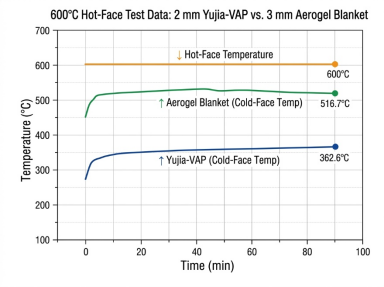
600°C Hot-Face Test Data: 2 mm Yujia-VAP vs. 3 mm Aerogel Blanket
Plug that into the formula. For R = 6.0 (m²·K)/W, the required metal vacuum insulation panel thickness is just d = 6.0*0.0018 = 0.0108m ≈ 11mm.
Just 15~20mm of VAP high-temperature metal vacuum insulation panels can match the insulation performance of 240mm of conventional rock wool!
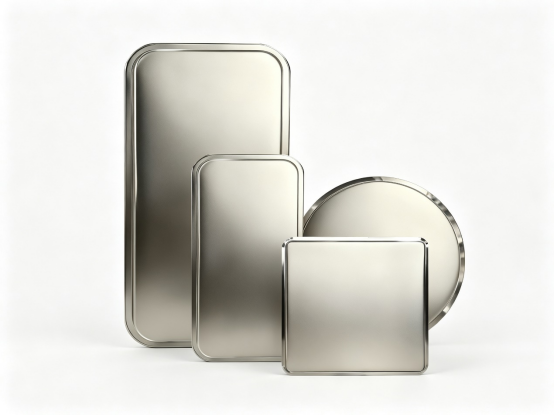
For premium container-home projects, that turns an insulation headache into three big selling points:
Good insulation doesn’t have to mean chunky walls.
Forget piling on thickness to build up thermal resistance. A 5-40mm metal vacuum structure can meet U ≤ 0.15 W/(m²·K), give back space that would otherwise disappear into the walls and keep modules within shipping dimensions. More room inside, better use of container capacity.
Built for temperature swings. Built to protect the structure.
An ambient operating range of -40°C – 90°C covers projects in extreme climates, from Saudi Arabia’s 45°C+ heat to Canada’s -40°C cold.
Even at a mean temperature of -170°C, the metal vacuum insulation panel (VIP) maintains a thermal conductivity of 0.0006 W/(m·K).
The 0.1mm SUS304 stainless-steel shell is fully laser-welded, with a leak rate < 10⁻¹⁰ Pa·m³/s, sealing the core in a vacuum free of air and moisture. Even with big temperature differences and intense moisture pressure, thermal conductivity stays stable. No moisture-driven collapse in thermal resistance, with protection against CUI throughout the service life.
Continuous insulation, right around the building.
Heat leaking through panel joints is a classic container-home headache. Start with ultra-narrow edge seals at the prefab stage, then use staggered, interlocking joints and tightly fitted flexible strips with high thermal resistance on site. That keeps the edge linear thermal transmittance (Ψ value) very low and creates a continuous, wraparound Passive House insulation layer.
What VAP Brings to Container-Home Exports

The market’s moving from selling metal boxes to selling quality buildings. Passive House-level energy use is becoming a real way to stand out from the competition.
Super Tech Advanced Material’s VAP metal vacuum insulation panels, built for high temperatures and strong resistance to shock damage, give container-home factories a practical engineering solution: use exceptional thermal performance to get past space limits.
VAP high-temperature metal vacuum insulation panels: the specs
| Parameter | Waarde |
|---|---|
| Thermal conductivity | ≤0.0018 W/(m·K) |
| Recommended operating temperature | -196°C-800°C |
| Compressive strength (<10%) | ≤0.5MPa |
| Bulk density | 250-420kg/m³ |
| Areal density (10mm) | 2-5kg/m² |
| Leak rate | <10⁻¹⁰Pa.m³/s |
| Maximum size | 500×1000mm |
| Minimum size | 100×100mm |
| Thickness range | 2-40mm |
| Edge-seal width | 5~15mm |
| Class A flame retardancy | — |
| Need other sizes or shapes? | Custom options are available. |
External walls stay slim, usable floor area stays yours, and thermal resistance stands up to extreme cold and heat.
For container-home makers, this opens doors to premium overseas tourism projects, demanding mining-site accommodation and zero-carbon building tenders. The pitch is simple: serious energy savings and low running costs for decades, giving buyers a reason to pay more.
Let’s compare notes: have you used low energy use or better insulation to stand out on a container-home or modular export project? Drop a comment about wall thermal calculations for different climates or how you choose thinner insulation.